
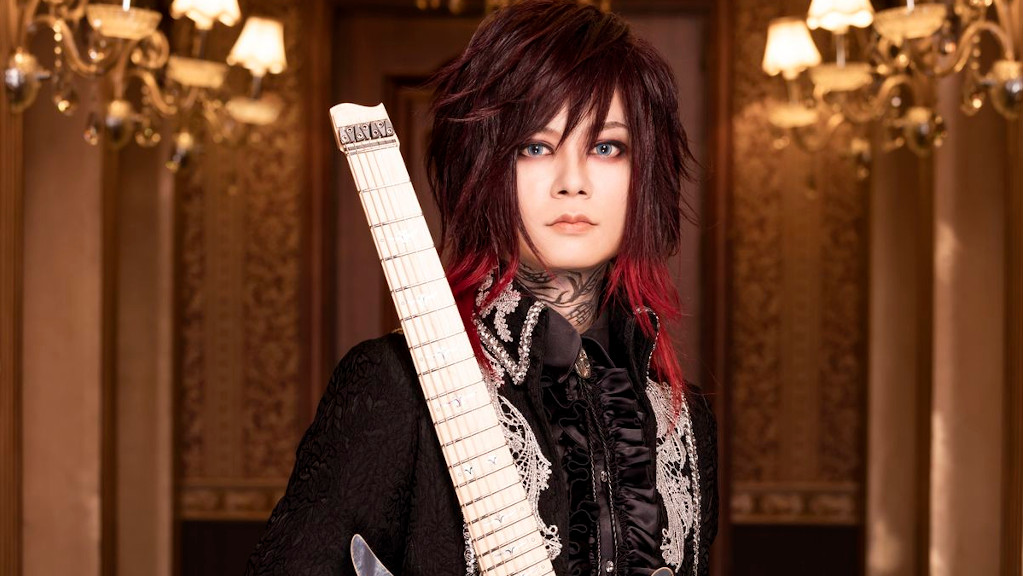
If you’ve ever witnessed Shiren shredding a seven-string ESP guitar while delivering harsh vocals that sound like they were pulled directly from the abyss, you’ve met one of the defining figures in modern Japanese metal. He isn’t just a guitarist; he is the focal point of this entire story and the driving force behind Unlucky Morpheus. Today, June 3, 2026, marks a monumental moment: the release of Gate of Hell, the devastatingly heavy follow-up to last year’s Gate of Heaven. It also raises a bigger question: how does a player this extreme keep evolving when most careers would have already peaked?
But Shiren’s journey to becoming the undisputed “Final Boss” of the scene wasn’t a straight line of easy victories. It was a brutal gauntlet of physical pain, identity shifts, and relentless resilience.
The Mystery of Hirano Yukimura: From the Underground to the World Stage
Before he was known as the violet-clad mastermind of Unlucky Morpheus, Shiren operated under his real name, Hirano Yukimura. A graduate of MI Japan’s GIT (Guitar Institute of Technology), he wasn’t just “good”—he was a proven elite player, and in 2008 he won the GIT Masters championship. That detail matters, because it explains why so many musicians around him treated him less like an up-and-comer and more like a future weapon.
In the late 2000s and early 2010s, he was the secret weapon of the dōjin (independent) music scene. Whether he was crafting hyper-speed Touhou arrangements or collaborating with circles like Undead Corp and Ankimo, his technical precision was otherworldly. But the world really took notice in 2012 when a certain fox-masked phenomenon called BABYMETAL needed the best of the best.
Yes, Shiren (as Hirano Yukimura) was an early member of the Kami Band, and he played during the “Legend I, D, Z” apocalypse shows in 2012–2013—a tiny but massive insider detail for anyone tracing the roots of modern Japanese metal spectacle. He stood on those early stages, helping build the live force that would later explode globally. Yet, he didn’t stay. Why? Because Shiren wasn’t meant to be a supporting character. He was born to lead.
The Dictator’s Guitarist: The Yousei Teikoku Era (2013-2018)
In 2013, Shiren joined the gothic metal powerhouse Yousei Teikoku as their lead guitarist. This era defined his visual aesthetic and his ability to blend symphonic grandeur with blistering metalcore. Tracks like “Shito Kakusei” and “DISORDER” showcase his ability to weave complex melodies around the commanding vocals of Empress Yui.
It was during this time that he transitioned from Hirano Yukimura to Shiren. He was at the height of his powers, touring the world and headlining major festivals. But behind the scenes, a silent enemy was brewing.
The Breaking Point: Battling Tenosynovitis
In late 2016, disaster struck. Shiren was diagnosed with severe tenosynovitis (tendonitis) in his wrists. For a guitarist whose style relies on surgical precision and 200 BPM alternate picking, this was a potential career-ender.
Most would have hung up the guitar. Shiren? He adapted.
He famously began using a specialized stage support system developed with ESP—known among fans as the “Shiren Stand”—so he wouldn’t have to carry the full weight of the instrument while performing. That one innovation says everything about him: this was not a retreat, it was engineering in service of survival. He delegated rhythm parts to his bandmates, focused on the most intricate leads, and rethought how to stay dangerous on stage without destroying his hands. More importantly, he leaned even harder into his role as a composer and a harsh vocalist.
This period of physical struggle is what gave birth to the Unlucky Morpheus we know today. He stepped back from Yousei Teikoku in 2018 to focus all his energy on his own vision. He didn’t just survive his injury; he used it to evolve.
Unlucky Morpheus: The Ultimate Metal Supergroup
If you’re new to the “I Love Japanese Music” family, you might wonder why we obsess over Unlucky Morpheus (often called Ankimo). It’s because they are essentially the Avengers of Japanese Metal, and at the center of that storm is Shiren.
Shiren didn’t just pick “good” musicians; he gathered titans:
- Fuki: Arguably the greatest female power metal vocalist in Japan (ex-Light Bringer, Doll$Boxx).
- Jill: A classically trained violin virtuoso who shreds harder than most lead guitarists.
- Fumiya: A literal machine on the drums (also of Galneryus).
- Ogawa & Jinya: The bedrock of the band’s technical prowess.
Together, they create a sound that is as beautiful as it is terrifying. In Ankimo, Shiren proves he can command symphonic scale, dramatic arrangement, and technical fireworks without losing emotional impact. His leadership turned a humble dōjin project into a major-label force that rivals any western metal act.
Unholy Orpheus: Shiren’s Brutal Side in Full
Unholy Orpheus matters because it reveals another side of Shiren—one that is even more stripped down, extreme, and direct. This is a Melodic Death Metal project, and the key insider detail is what Shiren takes on himself: all guitars, bass, and harsh vocals.
Where Unlucky Morpheus often balances symphonic beauty, soaring melodies, and virtuoso flash, Unholy Orpheus pushes Shiren toward a more brutal edge. The riffs hit harder, the atmosphere is darker, and the aggression is much more immediate. There’s no hiding behind spectacle here. It’s Shiren concentrating his heaviest instincts into a project that feels like a pure stress test of his musicianship.
That contrast is exactly why the project stands out. Ankimo shows Shiren as a composer and arranger with a symphonic reach; Unholy Orpheus highlights how far he can go when he handles the weight almost entirely himself. It’s a sharp reminder that Shiren’s identity in Japanese metal was never limited to just one sound.
Revelation: Why ‘Gate of Hell’ is the Ultimate Payoff
Released today, Gate of Hell is the culmination of Shiren’s entire life’s work. While Gate of Heaven (2025) explored the more melodic, symphonic side of the band, Gate of Hell is the moment where every thread tightens: the GIT prodigy, the dōjin technician, the early Kami Band player, the Yousei Teikoku shredder, the injured survivor, and the architect of Unlucky Morpheus all collide in one statement. It features some of Shiren’s most aggressive harsh vocals to date and complex arrangements that seem to defy the physical limitations of his past injuries.
As fans, we often see these artists as invincible figures. But Shiren’s “Final Boss” status comes from the fact that he is human. He felt the pain, he faced the possibility of silence, and he chose to scream back louder than ever.
When you listen to the track “Inferno Symphony,” you aren’t just hearing a song; you’re hearing the payoff to years of reinvention. This is the real hidden gem of his career: Shiren isn’t just a great guitarist because he can play fast. He’s a great musician because he keeps finding new forms—whether through the symphonic force of Ankimo, the all-in brutality of Unholy Orpheus, or the sheer stubborn innovation behind the Shiren Stand—without losing his identity. That’s why this post starts and ends with Shiren.
Don’t Miss Out on This Masterpiece
If you haven’t secured your copy of the new album yet, now is the time. This release is already flying off the shelves in Japan and is set to be the defining metal album of 2026.
I only recommend products I use myself. By clicking my affiliate links below, you help support this channel at no additional charge to you.
- Order ‘Gate of Hell’ and other Unlucky Morpheus gems at CDJapan – Use this for the fastest shipping directly from Japan!
Are you ready to walk through the gate? Let us know your favorite Shiren riff in the comments!
Pingback: Fuki: The Unstoppable Vocal Force of Unlucky Morpheus -
Pingback: Fuki: The Peerless Voice of Unlucky Morpheus and the ‘Gate of Hell’ Era -
Pingback: FUMIYA: The High-Speed Powerhouse of Unlucky Morpheus -
Pingback: Hiroyuki Ogawa: The Low-End Engine of Unlucky Morpheus -