
Author: IdolThoughts
I only recommend products I use myself. By clicking my affiliate links below, you help support this channel at no additional charge to you.
Primary Recommendation: Get Unlucky Morpheus – 'Gate of Hell' on Amazon
Secondary Option: Order 'Gate of Hell' from CDJapan (Affiliate Link)
When you think of Japanese power metal, your mind probably goes straight to the "shred." You think of the lightning-fast guitar solos, the operatic vocals that reach the heavens, and the double-bass drumming that sounds like a controlled landslide. But there is a secret weapon in the world of Unlucky Morpheus that often goes unnoticed by the casual listener until it’s too late: and then it’s all you can hear.
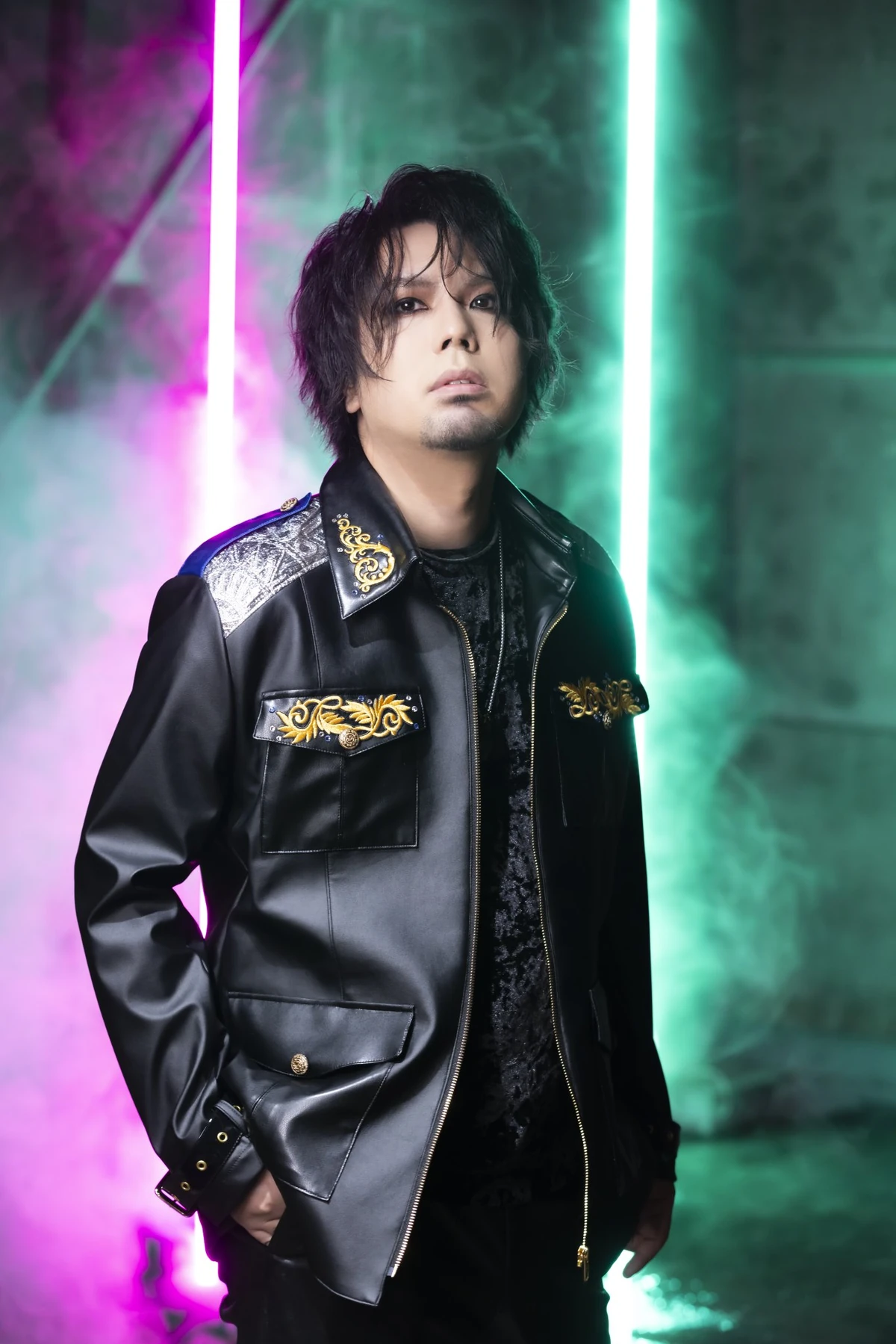
I’m talking about the man who holds the entire "Gate of Hell" together. I’m talking about Hiroyuki Ogawa, the "Shadow Orchestrator" whose bass lines provide the funk-infused spine to some of the most intense metal ever produced in Tokyo.
How does a guy who started with classical guitar and deep-dived into jazz and funk become the essential Unlucky Morpheus bassist? It’s a zigzag story of destiny, technical obsession, and a fateful meeting at a music school that changed the trajectory of J-Metal forever.
The Curiosity Trap: The Funk Artist in a Metal World
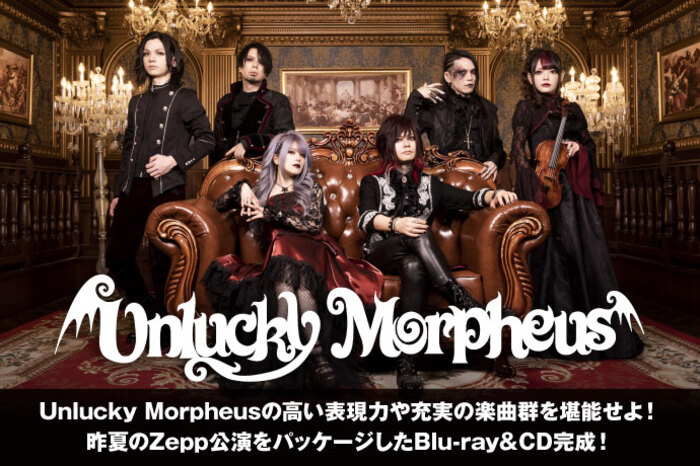
Have you ever looked at a symphonic metal lineup and wondered, "Who is actually keeping this from falling apart?" With a violinist like Jill and a technical mastermind like Shiren at the helm, the music is a whirlwind of high-frequency energy.
The secret to Unlucky Morpheus’s massive sound isn't just more distortion; it’s the groove. Hiroyuki Ogawa doesn't just play the notes; he plays the space between them. Coming from a background that values the "pocket" and the rhythmic "bounce" of funk, Ogawa brings a level of sophistication to the Hiroyuki Ogawa bass technique that is rarely seen in the genre.
Why would a funk-metal hybrid work so well in a band known for its "Touhou" roots and symphonic grandiosity? Because without Ogawa’s rhythmic architecture, the speed would just be noise. He is the anchor that allows the rest of the band to fly.
The Guessing Game: From Luna Sea to MI Japan
Hiroyuki wasn’t born with a 5-string ESP bass in his hands. His journey began in the 5th grade with a classical guitar, a gift of sorts from the musical influence of his brother and cousin. But destiny had a different sound in mind. While his brother was blasting Luna Sea in the next room, young Hiroyuki found himself mesmerized not by the soaring vocals or the flashy guitars, but by the low-end vibrations vibrating through the wall.
He realized that the bass was the soul of the song.
This obsession led him to MI Japan (Musicians Institute Japan), a legendary breeding ground for technical mastery. It was here that the pieces of the puzzle began to click. At MI Japan, Hiroyuki wasn't just learning scales; he was building a network. This is where he connected with Shiren, the architect of Unlucky Morpheus.
Shiren knew he needed someone who could handle the "Final Boss" level of technicality he was writing, but who also had the musicality to prevent the songs from sounding like a MIDI file. He found that in Ogawa. But before they became the titans of the metal scene, there was TRICK BOX.
The Payoff: TRICK BOX, THE CHARM PARK, and the Rise of the Shadow Orchestrator
To truly understand the Trick Box band influence, you have to look at Ogawa’s versatility. While Unlucky Morpheus is his primary battleground, his work with TRICK BOX and THE CHARM PARK showcases a musician who refuses to be pigeonholed.
In TRICK BOX, Ogawa leans into his fusion roots. It’s technical, it’s playful, and it’s undeniably "groovier" than his metal work. This versatility is what makes him so dangerous in Unlucky Morpheus. When you listen to a track like those on the Gate of Hell release, you aren't just hearing a bassist following the guitar's root notes. You’re hearing a performer who understands syncopation and slap techniques that he brought over from his time in the jazz and funk trenches.
He officially joined the "Ankimo" (Unlucky Morpheus) ranks as a permanent member around 2016, though he had been a constant presence in their orbit long before. His arrival solidified the "Six-Member Era" that many fans consider the band's golden age. Alongside Fuki’s powerhouse vocals and the dual-guitar assault of Shiren and Jinya, Ogawa’s 5-string bass became the glue.
The Gear of a Rhythmic Architect
For the gear nerds among us (and I know you're out there), Ogawa’s setup is as precise as his playing. He’s a dedicated ESP artist, often wielding a custom E-II 5-string bass. Why five strings? In the world of modern J-Metal, those low-B frequencies are essential for competing with down-tuned guitars.
He pairs his technical prowess with an Aguilar TH500 amp head, ensuring that his tone is punchy enough to cut through Jill’s violin while remaining warm enough to support the melody. It’s a delicate balance that he executes with surgical precision every single night on tour.
The Trust Transfer: Why We Love the "Ankimo" Rhythm Section
At I Love Japanese Music, we don’t just care about the hits; we care about the craft. Hiroyuki Ogawa represents the best of the Japanese music scene: a performer who has spent thousands of hours mastering his instrument, only to use that mastery to elevate his bandmates. If you want to go deeper on the rhythm machine around him, check out Jinya and Fumiya: The Technical Titans.
When you watch him live: whether it's on the LUNATIC EAST Blu-ray or during their legendary "HELL or HEAVEN" tour: you see a man in complete control. He isn't seeking the spotlight; he is becoming the stage upon which everyone else performs. That is the definition of a "Shadow Orchestrator."
He’s also an educator, returning to his roots to teach the next generation of bassists. This commitment to the "Way of the Bass" is why he has such a devoted following. He isn't just a "member of a band"; he is a pillar of the community.
The Pavlovian Peak: The Hidden Gem of Quadratum
If you want the ultimate "Aha!" moment regarding Hiroyuki Ogawa, you need to listen to Quadratum from Unlucky Morpheus.
While the main band is a symphonic metal powerhouse, Quadratum is the instrumental sub-unit where the technical shackles are completely removed. Featuring Jinya, Jill, FUMIYA, and Ogawa, their debut album Loud Playing Workshop is a masterclass in instrumental covers.
My Insider Recommendation: Listen to their cover of Van Halen’s "Eruption." While the violin takes the lead, pay close attention to the bass. Ogawa provides a foundation that is so rock-solid it allows the violin to mimic a guitar with frightening accuracy. It’s a hidden gem that reveals just how much work Ogawa is doing behind the scenes.
Hiroyuki Ogawa is more than just the Unlucky Morpheus bassist. He is the bridge between genres, the connection between jazz-fusion's complexity and power metal's intensity. He is the Rhythmic Architect.
Don't miss out on the latest chapter of his legacy!
The "Gate of Hell" is open, and Ogawa’s bass is the key. Make sure you grab the official release to hear his technical brilliance in high fidelity.
Click here to buy 'Gate of Hell' on Amazon
Secondary Option: Order from CDJapan
Meta description: Explore the funk-metal fusion of Hiroyuki Ogawa, the rhythmic architect who anchors the symphonic intensity of Unlucky Morpheus.
Stay tuned to I Love Japanese Music for more deep dives into the legends of the J-Rock and J-Metal scene!